

Palabras clave
evasión de predadores
Iguanidae
Anolinae
territorialidad
uso de hábitat
Cómo citar


Descargas

Esta obra está bajo una licencia internacional Creative Commons Atribución-NoComercial 4.0.
Derechos de autor 2025 Martín Carrera
Resumen
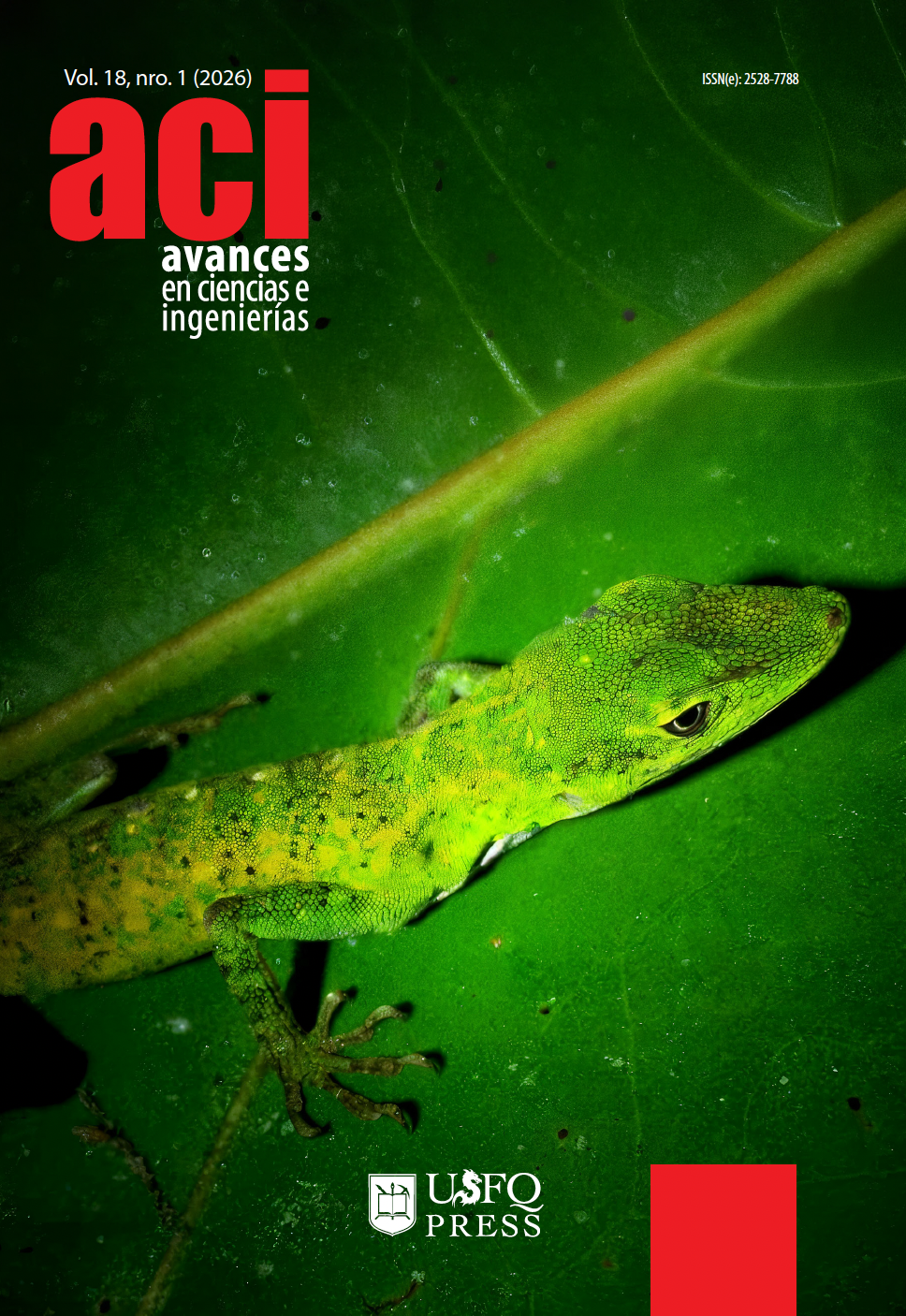
La selección de perchas para dormir es importante como estrategia para evitar depredadores, defender territorio y acceder a áreas de alimentación y de reproducción. Este tema ha sido estudiado extensamente en diferentes grupos de organismos, incluyendo el diverso grupo de lagartijas del género Anolis. Para Anolis gemmosus solo existe un estudio acerca de la selección de perchas para dormir, pero solo toma en cuenta las variables físicas de las perchas. En este estudio tomamos en cuenta nuevas variables como sexo y tamaño de las lagartijas, estudiando su efecto en el tipo de percha y el área de la hoja. Nuestros resultados indican que existe una relación significativa entre el tamaño de los individuos, especialmente los machos, con respecto al área de percha. Este patrón podría reflejar a una estrategia para evadir depredadores, mantener territorios, o podría resultar de una mayor disponibilidad de hojas con un rango de área específica en el hábitat de A. gemmosus.Referencias
Mohanty, N. P., Harikrishnan, S., and Vasudevan, K. (2016). Watch out where you sleep: nocturnal sleeping behaviour of Bay Island lizards. PeerJ, 4,e1856. https://doi.org/10.7287/peerj.preprints.1798v1
Shein-Idelson, M., Ondracek, J. M., Liaw, H. P., Reiter, S., and Laurent, G. (2016). Slow waves, sharp waves, ripples, and REM in sleeping dragons. Science, 352(6285), 590-5. https://doi.org/10.1126/science.aaf3621
Campbell, S., and Tobler, I. (1984). Animal sleep: a review of sleep duration across phylogeny. Neuroscience & Biobehavioral Reviews, 8, 269-300. https://doi.org/10.1016/0149-7634(84)90054-x
Fei, H., de Guinea, M., Yang, L., Chapman, C. A., and Fan, P. (2022). Where to sleep next? Evidence for spatial memory associated with sleeping sites in Skywalker gibbons (Hoolock tianxing). Animal Cognition, 25(4), 891-903. https://doi.org/10.1007/s10071-022-01600-0
Langford, F. M., and Cockram, M. S. (2010). Is sleep in animals affected by prior waking experiences?. Animal Welfare, 19(3), 215-222. https://doi.org/10.1017/S0962728600001597
Reaney, L.T., and Whiting, M.J. (2003). Picking a tree: habitat use by the tree agama, Acanthocercus atricollis atricollis, in South Africa. African Zoology,38, 273-278. https://doi.org/10.1080/15627020.2003.11407281
Sabo, J.L. (2003). Hot rocks or no hot rocks: overnight retreat availability and selection by a diurnal lizard. Oecologia, 136, 329-335. https://doi.org/10.1007/s00442-003-1292-6
Ikeuchi, I., M. Hasegawa., and Mori, A. (2012). Characteristics of sleeping sites and timing of departure from them in a Madagascan diurnal gecko, Lygodactylus tolampyae. Current Herpetology, 31, 107-116. https://doi.org/10.5358/hsj.31.107
Razafimahatratra, B., Mori, A., and Hasegawa, M. (2008). Sleeping site pattern and sleeping behavior of Brookesia decaryi (Chamaeleonidae) in Ampijoroa dry forest, northwestern Madagascar. Current Herpetology,27, 93-99. https://doi.org/10.3105/1881-1019-27.2.93
Cabrera-Guzmán, E., and Reynoso, V.H. (2010). Use of sleeping perches by the lizard Anolis uniformis (Squamata: Polychrotidae) in the fragmented tropical rainforest at Los Tuxtlas, Mexico. Revista Mexicana de Biodiversidad,81, 921-924. https://doi.org/10.22201/ib.20078706e.2010.003.662
Poche, A.J., R. Powell., and Henderson, R.W. (2005). Sleep-site selection and fidelity in Grenadian Anoles. Herpetozoa, 30, 3-10.
Singhal, S., and Johnson, M. (2007). The behavioral ecology of sleep: natural sleeping site choice in three Anolis lizard species. Behaviour, 144, 1033-1052. https://doi.org/10.1163/156853907781871860
Acerbi, A., and Nunn, C.L. (2011). Predation and the phasing of sleep: an evolutionary individual-based model. Animal Behaviour, 81, 801-811. https://doi.org/10.1016/j.anbehav.2011.01.015
Kaiser, C.M., and Kaiser, H. (2021). Coming home to roost: comments on individual sleep-site fidelity, sleep-site choice, and sleeping positions in Anolis (Norops) leditzigorum (Köhler et al., 2014) in Costa Rica (Squamata: Dactyloidae). Herpetological journal, 14, 375-378.
Gorman, G.C. (1980). Anolis occultus, a small cryptic canopy lizard: Are there pair bonds. Caribbean Journal of Science, 15, 29-31.
Kattan, G. (1984). Sleeping perch selection in the lizard Anolis ventrimaculatus. Biotropica, 16, 328-329. https://doi.org/10.2307/2387945
Goto, M.M., and Osborne, M.A. (1989). Nocturnal microhabitats of two Puerto Rican grass lizards, Anolis pulchellus and Anolis krugi. Journal of Herpetology, 23, 79-81. https://doi.org/10.2307/1564322
Clark, DL., and Gillingham, J.C. (1990). Sleep-site fidelity in two Puerto Rican lizards. Animal Behaviour, 39, 1138-1148. https://doi.org/10.1016/s0003-3472(05)80786-9
Shew, J.J., Larimer, S.C., Powell, R., and Parmerlee, J.S. (2002). Sleeping patterns and sleep-site fidelity of the lizard Anolis gingivinus on Anguilla. Caribbean Journal of Science,38, 136-138.
Vitt, L.J., Cristina, T., Avila-Pires, S., Zani, P.A., and Espósito, M.C. (2002). Life in shade: The ecology of Anolis trachyderma (Squamata: Polychrotidae) in Amazonian Ecuador and Brazil, with comparisons to ecologically similar anoles. Copeia, 2, 275-286. https://doi.org/10.1643/0045-8511(2002)002[0275:listeo]2.0.co;2
Vitt, LJ., Avila-Pires, S., Espósito, M.C., Sartorius, S.S., and Zani, P.A. (2003a). Sharing Amazonian rain-forest trees: ecology of Anolis punctatus and Anolis transversalis (Squamata: Polychrotidae). Journal of Herpetology,37, 276-285. https://doi.org/10.1670/0022-1511(2003)037[0276:sarteo]2.0.co;2
Vitt, L.J., Avila-Pires, S., Zani, P.A., Sartorius, S.S., and Espósito, M.C. (2003b). Life above ground: ecology of Anolis fuscoauratus in the Amazon rain forest, and comparisons with its nearest relatives. Canadian Journal of Zoology,81, 142-156. https://doi.org/10.1139/z02-230
Molina-Zuluaga, C., and Gutiérrez-Cárdenas, D.A. (2007). Uso nocturno de perchas en dos especies de Anolis (Squamata: Polychrotidae) en un bosque Andino de Colombia. Papéis Avulsos de Zoologia, 47, 273-281. https://doi.org/10.1590/s0031-10492007002200001
Traverzo-Pérez, F.J. (2008). Hábitat estructural nocturno y fidelidad al dormidero en Anolis cristatellus y Anolis krugi. M.Sc. Thesis, Universidad de Puerto Rico, Puerto Rico. 75 p.
Losos, J. B. (2009). Lizards in an Evolutionary Tree: Ecology and Adaptive Radiation of Anoles (1st ed.). University of California Press, London, England.
Ayala-Varela. F., and Carvajal-Campos, A. (2019). Anolis gemmosus In: Torres-Carvajal, O., Pazmiño-Otamendi, G., and Salazar-Valenzuela, D., Reptiles del Ecuador. PUCE (Ed.). Museo de Zoología, Pontificia Universidad Católica del Ecuador, Quito, Ecuador.
Ramírez-Jaramillo, S.R. (2018). Microhábitats nocturnos en dos especies de Anolis (Iguania: Dactyloidae) al noroccidente de Pichincha, Ecuador. Revista Biodiversidad Neotropical, 8, 7-13.
Yánez-Muños, M.H., and Morales-Mite, M.A. (2013). Bosque Protector Río Guajalito: La selva subtropical en las laderas occidentales de los Andes. Pp. 129–143 In HERPETOFAUNA EN ÁREAS PRIORITARIAS PARA LA CONSERVACIÓN: El sistema de Reservas Jocotoco y Ecominga. (Ed.). Monografía 6: 1–392. Serie de Publicaciones del Museo Ecuatoriano de Ciencias Naturales (MECN), Fundación para la Conservación Jocotoco, Fundación Ecominga. Quito-Ecuador.
Schneider, C. A., Rasband, W. S., and Eliceiri, K. W. (2012). NIH Image to ImageJ: 25 years of image analysis. Nature Methods, 9, 671-675. https://doi.org/10.1038/nmeth.2089
Jaramillo, J., and Grijalva, E. (2010). Flora del bosque nublado de Río Guajalito. Herbario QCA de la Escuela de Biología. Facultad de Ciencias Exactas y Naturales de la Pontificia Universidad Católica del Ecuador, Quito, Ecuador.
R Development Core Team. (2021). R: A language and environment for statistical computing. RFoundation for Statistical Computing, Vienna, Austria. http://www.R-project.org.
Méndez-Galeano, M., and Calderon-Espinosa, M. (2017). Thermoregulation in the Andean lizard Anolis heterodermus (Squamata: Dactyloidae) at high elevation in the Eastern Cordillera of Colombia. Iheringia. Série Zoologia, 107, e2017018. https://doi.org/10.1590/1678-4766e2017018
Sierra, R. (1999). Propuesta preliminar de un sistema de clasificación de vegetación para el Ecuador Continental. Proyecto INEFAN / GEF-BIRF y EcoCiencia. Quito, Ecuador. 174 pp.
Christian, K.A., C.R. Tracy., Porter, W.P. 1984. Physiological and ecological consequences of sleeping-site selection by the Galapagos land iguana (Conolophus pallidus). Ecology, 65, 752-758.
Kamath, A., and Losos, L. (2017). The erratic and contingent progression of research on territoriality: a case study. Behavioral Ecology and Sociobiology, 71, 89-94. https://doi.org/10.1007/s00265-017-2319-z