
Praxis
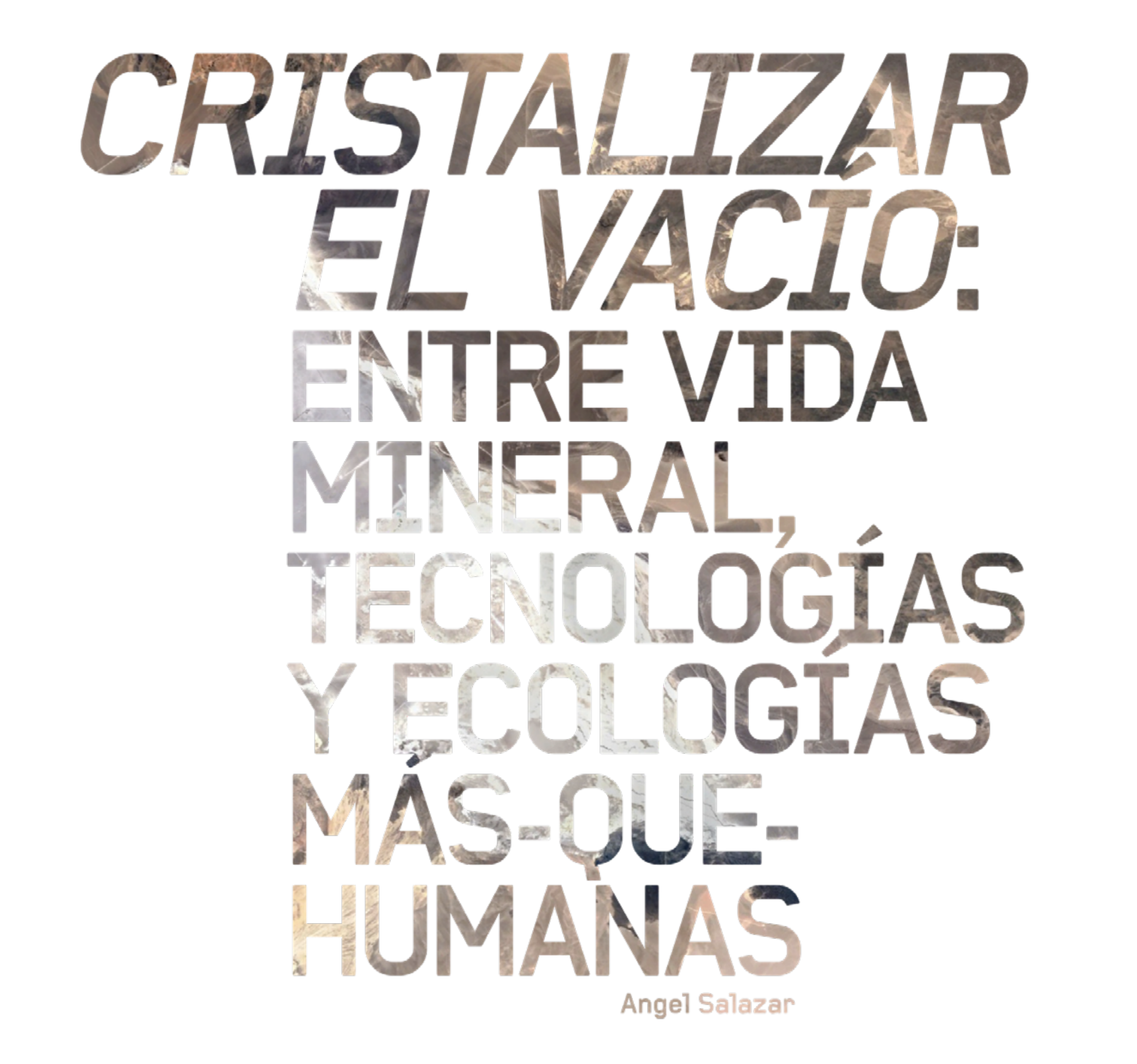
Crystallizing the Void: Between Mineral Life,Technologies, and More-than-Human Ecologies
Published 2026-06-15

Keywords
- art and technology,
- material agencies,
- artificial intelligence,
- ecological thinking,
- more-than-human
Downloads
Download data is not yet available.
Copyright (c) 2026 Angel Salazar

This work is licensed under a Creative Commons Attribution-NonCommercial-ShareAlike 4.0 International License.
How to Cite
Salazar, A. . (2026). Crystallizing the Void: Between Mineral Life,Technologies, and More-than-Human Ecologies. Post(s), 13, 290-305. https://doi.org/10.18272/post(s).v13i.4131
Abstract
Based on artistic research around the Lithium Triangle, this text reflects on the relationships between mineral life, technology, and ecological thinking. It focuses on the processes of inquiry, experimentation, and decision-making that shaped the work, bringing together material practices, technological explorations, and critical speculation to consider how minerals can activate alternative ways of reading contemporary technologies and their modes of production.
References
- Bennett, J. (2022). Materia vibrante: Una ecología política de las cosas. Caja Negra.
- Crawford, K. (2022). Atlas of AI: Power, politics, and the planetary costs of artificial intelligence. Yale University Press.
- De Landa, M. (2017). Mil años de historia no lineal. Editorial Gedisa.
- Lehuedé, S. (2024). An elemental ethics for artificial intelligence: Water as resistance within AI’s value chain. Philosophy & Technology, 37(1). https://doi.org/10.1007/s13347-024-00703-3
- Morton, T. (2023). Arquitectura sin Naturaleza. Bartlebooth.
- Vernadsky, V. (1926). La Biosfera. Leningrado: Nauchno-Tekhnicheskoe Izdatelstvo.