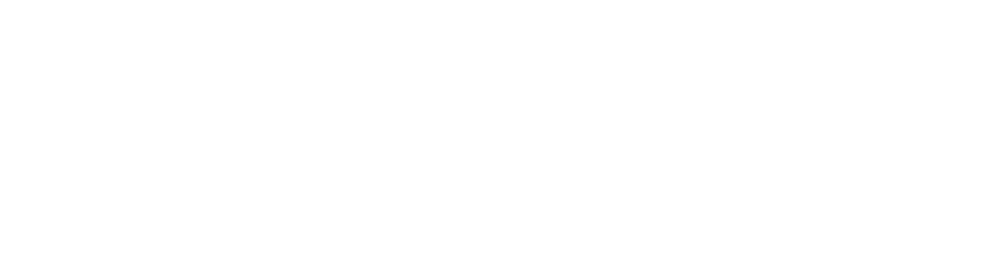
Naive realism
A defense from the embodied, embedded and enactive character of perception
DOI:
https://doi.org/10.18272/anima.v3i.2862Keywords:
Philosophy of Perception, naive realism, embodied, embedded, enactiveAbstract
This paper elaborates a defense of naive realism as a theory of perception. The starting point is to demonstrate that abandoning this position and opting for alternative theories is due to admitting the existence of an indissoluble gap between the contents of perception and the way things are in the world. With this in mind, it is argued that the plausibility of such a gap has as presuppositions: a) A world and a mind ontologically independent of each other; b) The passive character of perception; and c) The existence of an essence or noumenic character of objects. Subsequently, it is shown that by replacing presuppositions a) and b) by an embodied, situated, and active approach to perception; such a gap loses plausibility. Finally, presupposition c) is attacked to complete the defense of naive realism, and the peculiarity of the realism accepted here is explained, in that it does not admit pure points of view or knowledge of essences, but is based on the very limited character of human knowledge.
Downloads
References
Brandom, Robert. Articulating Reasons. Harvard University Press, 2000.
Carnap, Rudolf. The logical structure of the World and pseudoproblems in philosophy. Open Court, 2003.
Chisholm, Roderick. Perceiving: A Philosophical Study. Cornell University Press, 1957.
De Pinedo, Manuel. "¡No es un algo, pero tampoco es una nada! Mente y Normatividad." Análisis. Revista de investigación filosófica no. 1, 2014, pp. 121-160: dialnet.unirioja.es/servlet/articulo?codigo=4885349
Descartes, Rene. Meditaciones metafísicas con objeciones y respuestas. Alafaguara S.A, 1977.
Dewey, John. Logic: The theory of Inquiry. Rinehart & Winston , 1938.
Ducasse, Curt John. “Moore's Refutation of Idealism.” Schillp, P. The philosophy of G. E. Moore. Northwestern University Press, 1942, pp. 223-252.
Gadamer, Hans-Georg. Verdad y Método II. Suígueme, 1998.
Heidegger, Martin. Ser y Tiempo. Trotta, 2012.
Heras-Escribano, Manuel. “Pragmatism, enactivism and ecologial psychology: towards a unified approach to post-cognitivism.” Synthese, 2021, pp. S337-S363: link.springer.com/article/10.1007/s11229-019-02111-1
Kiverstein, Julian. “What is Heideggerian Cognitive Science?” Kiversteim, Julian. Heidegger and Cognitive Science. Palgrave McMillan, 2012, pp. 1-61.
Russell, Bertrand. Logic and Knowledge. George Allen & Unwin, 1956.
Ryle, Gilbert. The Concept of Mind. Routledge, 1949.
Sellars, Wilfrid. “Empiricism and the Philosophy of Mind.” Sellars, Wilfrid. Science, Perception and Reality. Routledge and Keagan Paul, 1963, pp. 1-40.
Vessey, David. “Davidson, Gadamer, Incommensurability and the Third Dogma of Empiricism.” Malpas, Jeff. Dialogues with Davidson: Acting, Interpreting, Understanding. The MIT Press, 2011, pp. 241-258.
Downloads
Published
Issue
Section
License
Copyright (c) 2023 Gabriel Nicolás Cruz

This work is licensed under a Creative Commons Attribution-NonCommercial 4.0 International License.
Authors who publish in this journal agree to the following terms:
- Authors retain copyright and grant the journal the right of first publication of their work, which is simultaneously subject to the Creative Commons Attribution–NonCommercial 4.0 License, permitting third parties to share the work provided that proper attribution is given to the author(s) and that the original publication in this journal is acknowledged.
- Authors may enter into separate, non-exclusive licensing arrangements for the published version of their work—such as inclusion in a monographic volume or other forms of reproduction—provided that the initial publication in this journal is duly acknowledged.
- Authors are encouraged to disseminate their work online:
- Prior to submission, authors may deposit their manuscript in preprint servers or repositories, including arXiv, bioRxiv, figshare, and SSRN, among others. Such deposits may generate scholarly exchange and increase citations of the published work (see The Effect of Open Access).
- Following submission, authors are encouraged to deposit their article in their institutional repository, personal website, or academic social network (e.g., Zenodo, ResearchGate, or Academia.edu).