
Journals
-

ACI Avances en Ciencias e Ingenierías
ACI Avances en Ciencias e Ingenierías is an international, multidisciplinary, diamond open-access scientific journal that publishes two issues per year (May and December) in English and Spanish. It publishes original research, reviews, and communications in sciences and engineering, promoting methodological rigor, transparent peer review, and open science practices. The journal prioritizes interdisciplinary contributions within STEM and aims to expand international knowledge exchange with broader social impact.
Before submission, authors must ensure that their manuscript aligns with the aims and scope of the journal.
ISSNe: 2528-7788
ISSN: 1390-5384
Editorial: USFQ PRESS
-

Iuris Dictio
Iuris Dictio is a peer-reviewed, open-access semiannual journal founded in 1998 and affiliated with the School of Law at the University of San Francisco de Quito (USFQ), dedicated to the study of law. Its purpose is to share unpublished and recent research that fosters legal analysis and debate, promoting an internationally responsible academic approach. Published under the philosophy of the Liberal Arts, Iuris Dictio publishes open-access articles in English and Spanish twice a year, combining general analysis with specialization in legal topics.
Additionally, it seeks to reach a specialized legal audience, with an Interviews section aimed at making the subject accessible to those with limited knowledge of the field.
ISSN (printed version until 2022): 1390-6402 ISSNe (electronic version): 2528-7834
Permanent Link:http://iurisdictio.usfq.edu.ec
Indexed in: MIAR, ERIHPLUS, LATINDEX, MLA, CZ3, LATINREV, BASE, DOAJ, REDIB, Latinoamericana, LATAM, Google Scholar, OAJI
Editorial: USFQ PRESS
-
post(s)
post(s) is a biannual peer-reviewed academic journal published by the Universidad San Francisco de Quito USFQ. The journal engages with contemporary debates in cultural studies and artistic practices, fostering interdisciplinary approaches to the study and production of visual culture and contemporary thought, as well as to critical inquiry and theoretical reflection.
The thematic focus of each issue is developed collaboratively by the journal’s editorial directors and invited guest editors. post(s) foregrounds professional, artistic, and academic praxis, positioning creative practice as a central axis of the publication. In addition to publishing scholarly research articles, the journal also provides a platform for experimental and performative forms of writing and knowledge production that expand conventional formats of academic inquiry.
-
USFQ Law Review
USFQ Law Review is a legal, academic and indexed journal, with a double-blind peer review proccess, authorial opening and biannual publication since 2021 with the issue number of this volume published in May, and the second in October 2021.
The Journal was born in 2012 as a student initiative. Since then, it is the first legal periodical publication in Ecuador that is fully developed, managed and edited by students of the Law Faculty of Universidad San Francisco de Quito, Ecuador.
Its objective is to provide a space for national and international experts in various areas of Law, such as students, professionals and academics, to publish legal research papers in which different perspectives and critical opinions on legal issues of current relevance. In addition, it seeks to be a source of research for its content of high academic level and to raise the quality of legal discussion in Ecuador and throughout the region, responding to the needs of the legal community, both nationally and internationally.
Abbreviation: USFQ L. Rev.
E-ISSN: 1390-8014 | ISSN: 2631-2573
Keywords: Jurisprudence; law; rights; legal theory
Permalink: https://revistas.usfq.edu.ec/index.php/lawreview
Indexed in: Latindex (Catalogue 2.0); Latindex (Directory); ISSN Portal; Crossref; ROAD; DOAJ; MIAR; REBID; Sherpa Romeo; Aura-AmeliCA; CORE; Internet Archive; I2OR; SIS; Google Scholar;
Associated to: Latinoamericana; RELAREDI; LatinREV; Declaration of Mexico (Open Access); DORA;
Content Access: OJS Repository; USFQ Library; LEXIS; Academia.edu; SSRN; Mendeley;
DOI: 10.18272/lr.v6i1 -

El Outsider: Journal of International Relations and Political Science
El Outsider is an academic journal for the dissemination of critical analysis on political issues in
the areas of International Relations and Political Science. The publication is annual, free, open
access and published by the Universidad San Francisco de Quito (USFQ). Subject to an editorial
process of peer review using the double-blind review method, El Outsider offers different spaces
for contribution to dynamize and disseminating of knowledge within the editorial line.
All the published content is compiled, edited and reviewed by the Editorial Committee, made up
of students and professors from the College of Social Sciences and Humanities (COCISOH) of the
USFQ.
Journal URL: https://eloutsider.com/
Access to contents: Archivos OJS, Biblioteca LHL
ISSN (online): 1390-8901
-
Ánima
Ánima is a student-run academic monographic series of the Liberal Arts and Literature Departments of the College of Social Sciences and Humanities (COCISOH) at Universidad San Francisco de Quito USFQ. It publishes research, reflections, and creative works in Spanish and English in the areas of Philosophy, Literature, Art History, and Creative Writing. It is an open access publication and uses a peer-review arbitration system through a double-blind review methodology. The objective of Ánima is to provide a space for undergraduate and graduate students to publish their research, reflections, poems, and short stories in these four disciplines.
ISSN: 2953-6340
-
USFQ Economic Review
The USFQ Economic Review publishes outstanding undergraduate research in economics and related disciplines. This open-access, peer-reviewed, and electronic journal is led by student editors with faculty oversight from the USFQ School of Economics. Articles are published continuously in both English and Spanish under the USFQ PRESS imprint.
The goals of this journal are to provide a platform for undergraduate students conducting research in economics and related fields to publish their work, and to foster serious, high-quality research from the early stages of their academic careers, allowing them to experience the peer review process.
Manuscripts undergo a rigorous peer-review process conducted by the Scientific Committee and Editorial Board of the USFQ Economic Review. The journal is distributed free of charge in digital format.
-
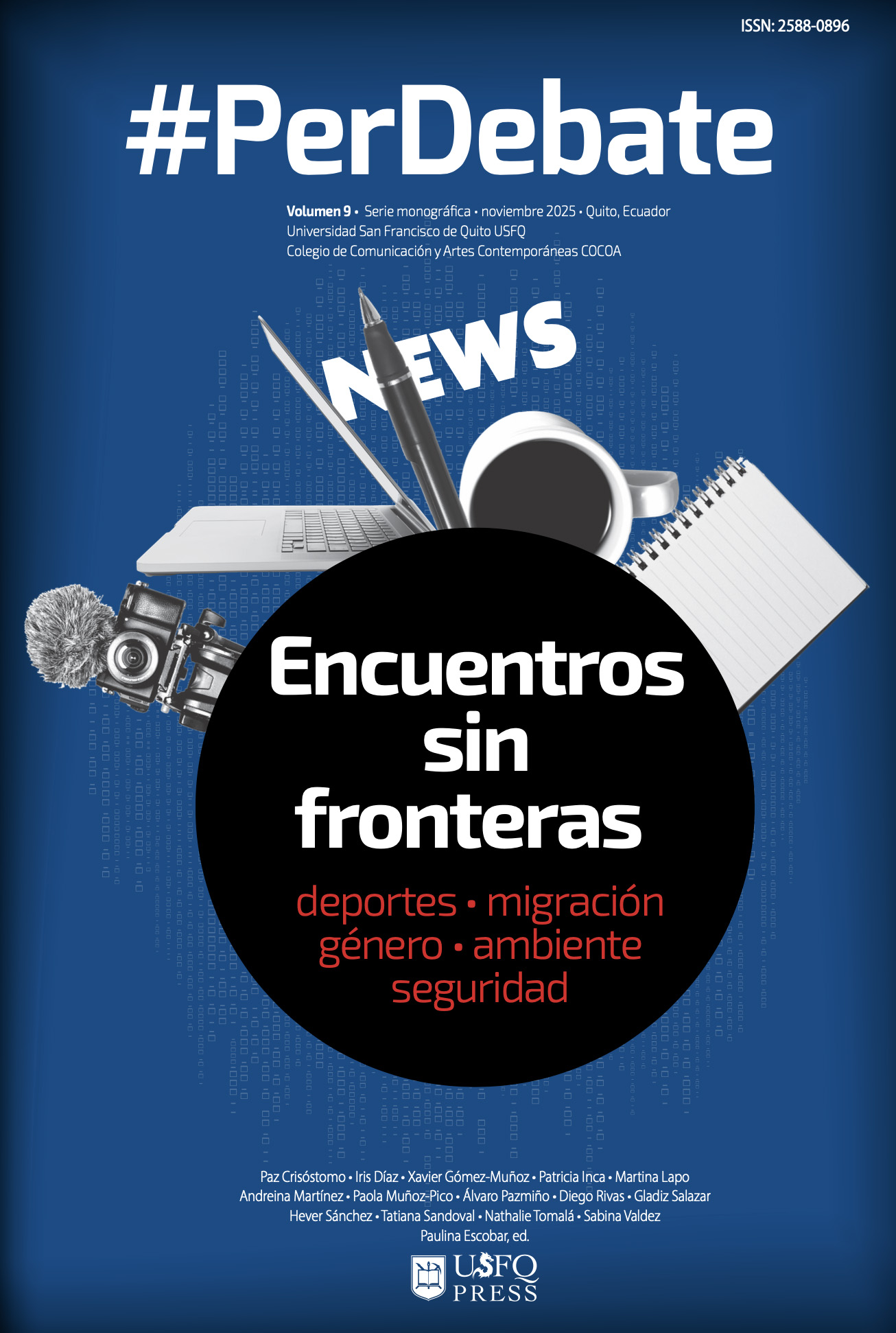
#PerDebate
PerDebate is a periodical, annual publication of the journalism career of the College of Communication and Contemporary Arts (COCOA) of the Universidad San Francisco de Quito (USFQ). It is published in Spanish and English, a journal of scientific interest, which aims to serve for the analysis and reflection of issues related to contemporary communication, with special emphasis on journalism.
It will publish articles in which scientific and academic rigor is observed and which conform to the subject matter and rules of publication.
Research, projects, experiences, in short, all the stories that are sought from journalism have a space for discussion in this monographic series. PerDebate solicits and publishes articles on both empirical and theoretical research, as well as conceptual reflection on professional and creative practices, in all areas related to journalism. The topics range from media analysis, media products, technological innovations for information and data management, audience interaction in the digital age, new platforms and journalistic initiatives, among others.
-
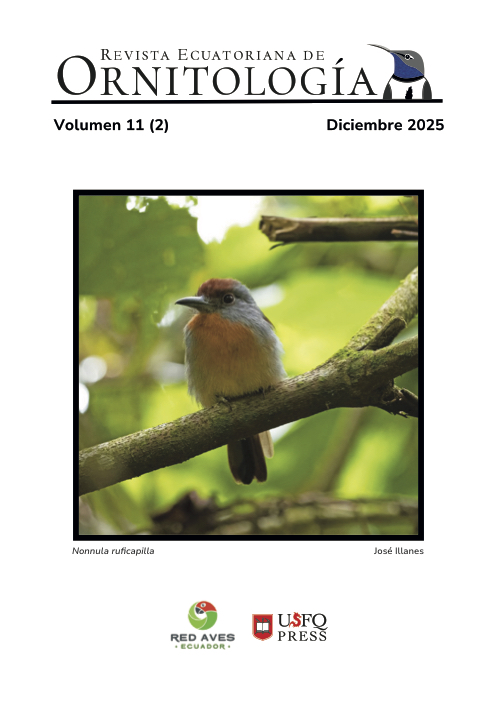
Revista Ecuatoriana de Ornitología
Revista Ecuatoriana de Ornitología is a publication of Red Aves Ecuador, in collaboration with USFQ PRESS of the Universidad San Francisco de Quito.
Its objective is to promote the dissemination of knowledge about the diversity of birds of Ecuador and the Neotropics. It is dedicated to the presentation of original and relevant information on the birds of these regions, covering topics such as natural history, ecology, distribution, conservation, systematics, among others.
The journal is aimed at the ornithological community interested in the birds of Ecuador and the Neotropics, and includes researchers and researchers as well as observers and people interested in ornithology.
ISSN: 2697-3685
-
-

Archivos Académicos USFQ
Archivos Académicos USFQ es una serie monográfica digital dedicada a la publicación de actas de reuniones académicas (congresos, foros, conferencias y otros eventos) en todas las áreas del conocimiento y quehacer humano, organizadas por la Universidad San Francisco de Quito USFQ. Es una serie monográfica de carácter multidisciplinario, con un proceso editorial con revisión por pares (peer reviewed) y publicada bajo una licencia de acceso abierto (open access).
Archivos Académicos USFQ se publica de manera ocasional, de acuerdo al desarrollo de las reuniones académicas USFQ. Se publicará documentos en español e inglés en la modalidad de acceso libre, en línea (digital), con DOI y su respectivo código ISBN electrónico.
-
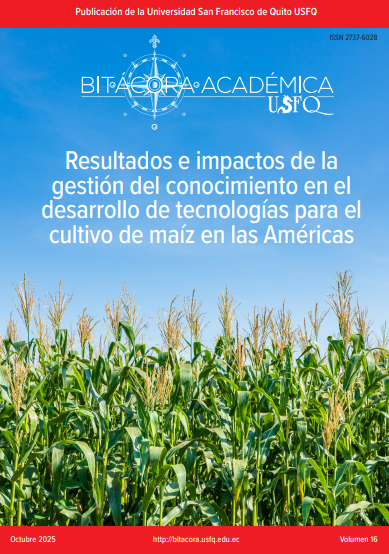
Bitácora Académica
Bitácora Académica USFQ is a diffusion organ of the Universidad San Francisco de Quito that reflects the reflective, critical, plural and free spirit of its academic community. The primary objective is to account for scientific, academic and humanistic work through updated revisions that are published electronically, all in order to bring knowledge closer to society as a whole. Articles in the USFQ Academic Journal refer to the "state of the art" of a specific subject. The publication of the articles fundamentally seeks to facilitate and promote the circulation of knowledge, the exchange of ideas, their discussion and subsequent commentary, showing itself as an essential tool to understand about a particular subject.
-
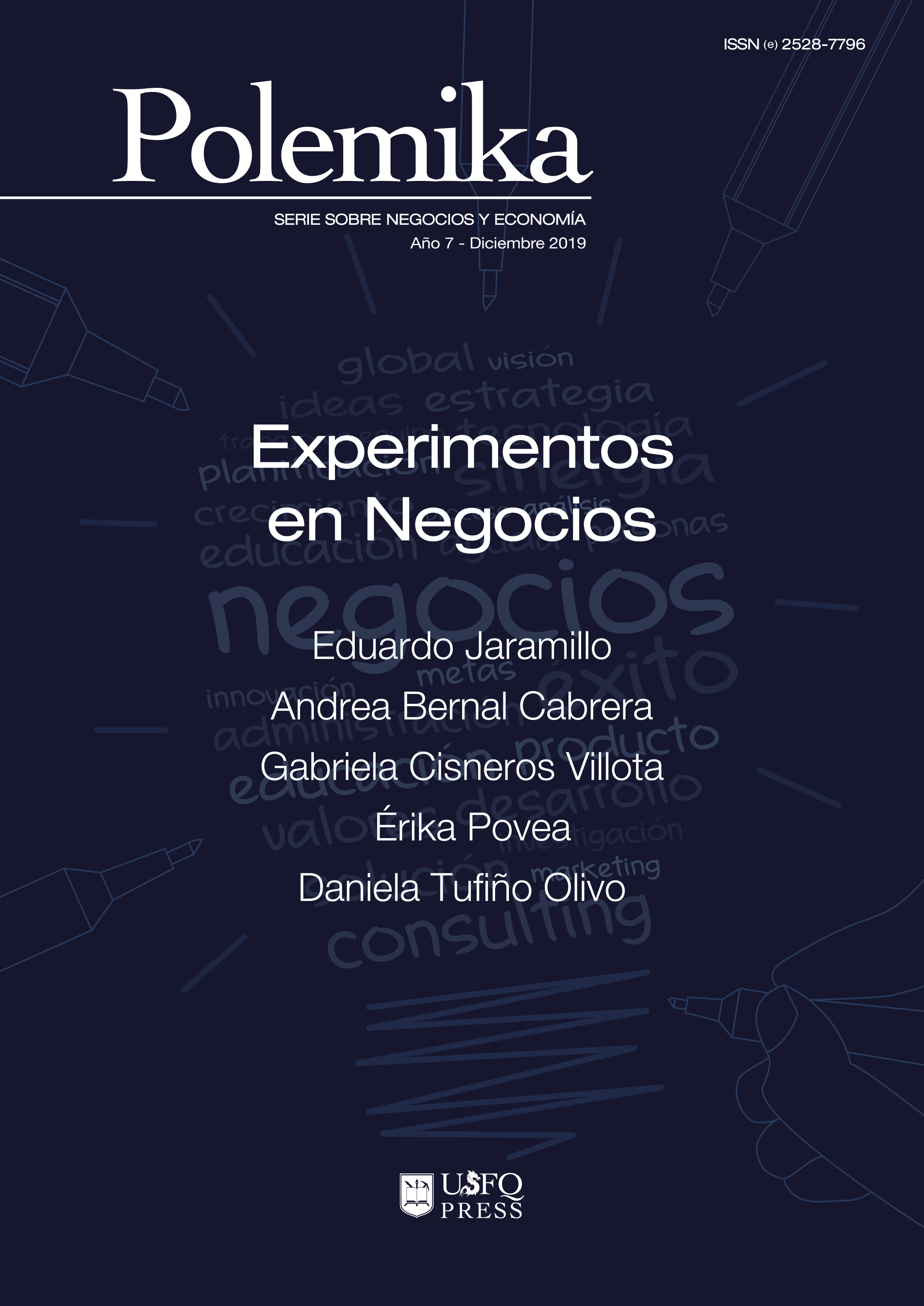
Polémika
Polémika is an academic journal that aims to promote high-level original research in the areas of management, entrepreneurship, marketing, finance, economics, public policy, and related areas. Interdisciplinary papers are particularly welcome.
Polémika is a peer-reviewed, open access, multidisciplinary monographic series published by the College of Administration and Economics (CADE) of the Universidad San Francisco de Quito USFQ. This publication is aimed at academics, businessmen and public officials, as well as students in areas related to business and economics. In this line, it promotes applied research, relevant to business and public policy decision making, and that serves to bridge the gap between academic analysis and business and public policy practice. This publication appears annually. It collects original works in Spanish or English by researchers from any institution and country. It is available for non-commercial use by anyone under a Creative Commons license.
-
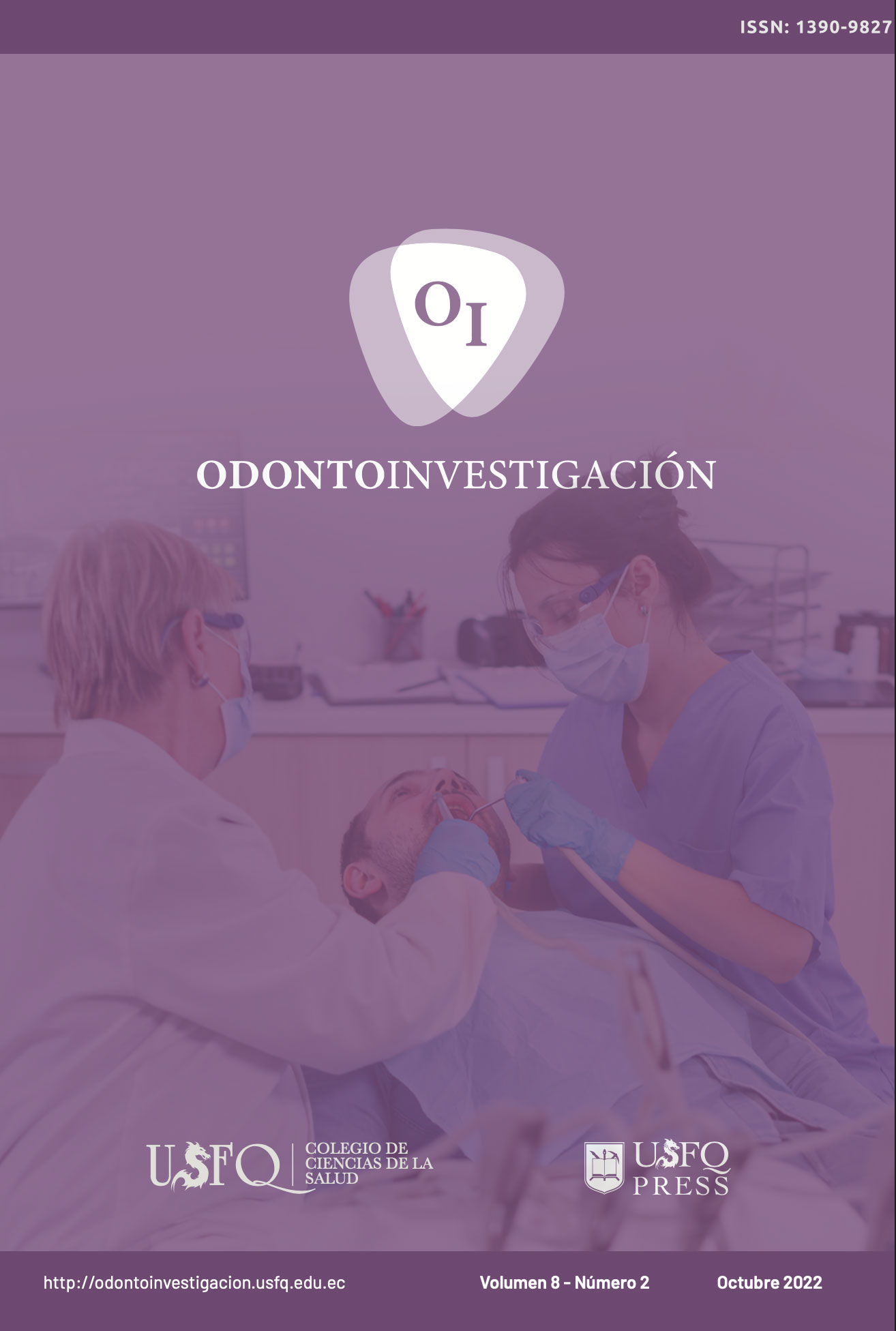
OdontoInvestigación
ODONTOINVESTIGACIÓN MAGAZINE is the official journal of the Escuela de Odontología at the Universidad San Francisco de Quito, open to professionals, students, teachers, educational institutions, research and universities of the country and the world in the dentistry area.
The OdontoInvestigación magazine aims to disseminate knowledge, academic and scientific research activities that are generated within the Escuela de Odontología at the Universidad San Francisco de Quito and also from related universities nationally and internationally.
-
Esferas
Esferas is a monographic series that brings together different essays and academic articles on community outreach projects carried out in Latin America. These texts serve to disseminate recent social projects and to understand the depth of the relationships established with the community, the work methodologies, and the approaches taken from different fields of knowledge.
ISSN (print version): 2631-2468 / ISSN (digital version): 2697-3499
Indexed / catalogued in: ROAD, Crossref, Dialnet, Google Scholar, Archive.org, Academia.edu.