Artículos
Evaluating the Role of Urban Planning and Proximity Factors in Occupational Disease Transmission in Meat Processing Zones in Aba
Evaluación del papel de la planificación urbana y los factores de proximidad en la transmisión de enfermedades ocupacionales en zonas de procesamiento cárnico en Aba

Evaluating the Role of Urban Planning and Proximity Factors in Occupational Disease Transmission in Meat Processing Zones in Aba
Avances en Ciencias e Ingenierías, vol. 18, núm. 1, pp. 1-18, 2026
Universidad San Francisco de Quito

Esta obra está bajo una Licencia Creative Commons Atribución 4.0 Internacional.
Recepción: 02 Octubre 2025
Aprobación: 15 Octubre 2025
Publicación: 17 Marzo 2026
Abstract: Urban slaughterhouses in developing cities often operate in densely populated environments with limited oversight, posing significant occupational health risks. This study investigated the influence of urban planning and proximity factors on disease transmission among workers in slaughterhouses across Aba, Abia State, Nigeria. The aim was to assess how spatial placement, architectural design, and environmental exposures contribute to occupational illnesses. A mixed-methods approach was employed, involving geospatial analysis, environmental monitoring, health surveys (n = 180), and facility inspections across six slaughterhouses (SH-1 to SH-6). GPS mapping revealed that four out of six facilities were within 200 meters of residential or market areas, with SH-1, SH-3, and SH-5 violating basic zoning regulations. Environmental monitoring showed elevated PM2.5 levels ranging from 54–94 µg/m³ (WHO limit: 25 µg/m³), with the highest levels at SH-3 (94 µg/m³). Ammonia (NH₃) and hydrogen sulfide (H₂S) concentrations exceeded safe thresholds in three facilities. Health data showed respiratory symptoms in up to 73% of workers (SH-3) and skin infections in 60% (SH-3). A strong positive correlation was observed between PM2.5 exposure and reported illness, and a significant negative correlation between distance to residential areas and respiratory complaints. Poor infrastructure, weak policy enforcement, and improper zoning were found to exacerbate these health risks. This study concludes that inadequate urban design and poor slaughterhouse placement significantly impacted occupational health. It recommends spatial restructuring, infrastructure upgrades, and integration of health impact assessments into abattoir planning policies in Nigeria.
Keywords: Urban planning, slaughterhouses, occupational health, air pollution, spatial proximity.
Resumen: Las plantas de faenamiento urbanas en ciudades en desarrollo suelen operar en entornos densamente poblados y con una supervisión limitada, lo que genera riesgos significativos para la salud ocupacional. Este estudio investigó la influencia de la planificación urbana y los factores de proximidad en la transmisión de enfermedades entre trabajadores de plantas de faenamiento en Aba, Estado de Abia, Nigeria. El objetivo fue evaluar cómo la ubicación espacial, el diseño arquitectónico y las exposiciones ambientales contribuyen a la aparición de enfermedades ocupacionales. Se empleó un enfoque de métodos mixtos que incluyó análisis geoespacial, monitoreo ambiental, encuestas de salud (n = 180) e inspecciones de instalaciones en seis plantas de faenamiento (SH-1 a SH-6). El mapeo por GPS reveló que cuatro de las seis instalaciones se encontraban a menos de 200 metros de zonas residenciales o mercados, y que SH-1, SH-3 y SH-5 incumplían regulaciones básicas de zonificación. El monitoreo ambiental mostró niveles elevados de PM2.5 que oscilaron entre 54 y 94 µg/m³ (límite de la OMS: 25 µg/m³), con los valores más altos en SH-3 (94 µg/m³). Las concentraciones de amoníaco (NH₃) y sulfuro de hidrógeno (H₂S) superaron los umbrales de seguridad en tres instalaciones. Los datos de salud registraron síntomas respiratorios en hasta el 73 % de los trabajadores (SH-3) y afecciones cutáneas en el 60 % (SH-3). Se observó una fuerte correlación positiva entre la exposición a PM2.5 y las enfermedades reportadas, así como una correlación negativa significativa entre la distancia a las zonas residenciales y las quejas respiratorias. Se determinó que la infraestructura deficiente, la escasa aplicación de políticas y una zonificación inadecuada agravaban estos riesgos para la salud. Este estudio concluye que el diseño urbano insuficiente y la ubicación inadecuada de las plantas de faenamiento impactaron de manera significativa la salud ocupacional. Se recomienda una reestructuración espacial, mejoras de infraestructura e integración de evaluaciones de impacto en salud en las políticas de planificación de plantas de faenamiento en Nigeria.
Palabras clave: planificación urbana, plantas de faenamiento, salud ocupacional, contaminación del aire, proximidad espacial.
INTRODUCTION
The spatial organization and architectural placement of slaughterhouses within urban environments have far-reaching implications not only for environmental sustainability but also for public and occupational health. In rapidly urbanizing cities such as Aba in Abia State, Nigeria, the integration or lack thereof, of meat processing facilities within residential and commercial zones poses significant challenges [1, 2]. These challenges are exacerbated by poor urban planning, inadequate infrastructure, weak regulatory enforcement, and a general neglect of occupational health and safety protocols in the informal meat sector.
Slaughterhouses, by design, are inherently hazardous environments. Workers are regularly exposed to blood, animal waste, bioaerosols, sharp tools, and zoonotic pathogens, which can result in a variety of occupational diseases including respiratory infections, skin disorders, eye irritations, and musculoskeletal injuries [3, 4]. While several studies have focused on the hygienic practices or meat quality in abattoirs [5, 6], few have rigorously examined the urban context and spatial determinants of health outcomes in such settings. This study attempts to bridge that gap by evaluating how the urban location, architectural condition, and proximity to sensitive land uses contribute to occupational disease risks among slaughterhouse workers in Aba.
Research conducted by Dada et al. [7] in Ibadan, Nigeria, indicates that unregulated slaughterhouses sited near residential areas contribute significantly to groundwater pollution and air contamination, with direct health implications for both workers and local residents. Similarly, Istifanus and Bwala [8] emphasized the role of poor waste management and inadequate zoning policies in facilitating the spread of pathogens. However, these studies rarely take into account the urban density, zoning compliance, and physical design of slaughterhouses as variables in occupational health outcomes.
International literature further underscores the importance of urban design in healthrelated outcomes in meat processing facilities. According to Grace et al. [9], abattoirs in sub-Saharan Africa often lack basic ventilation and sanitation infrastructure, with workers operating under informal conditions and with minimal access to personal protective equipment (PPE). In Bangladesh, Hasan et al. [10], demonstrated a strong correlation between slaughterhouse location near waterways and increased incidence of waterborne illnesses among workers and surrounding communities.
In the context of Aba, a major commercial hub known for its high population density and unregulated growth, the placement and condition of abattoirs have received little scholarly attention. Informal slaughterhouses are often embedded within market districts, lacking any spatial buffer from food stalls, homes, and public spaces [11]. These urban proximity factors amplify exposure to environmental and occupational hazards, especially in the absence of municipal oversight.
Previous research has shown that the spatial and architectural configuration of slaughterhouses has significant implications for both occupational health and urban environmental quality. Studies in developing contexts, such as Adesokan et al. [12] in Ibadan and Nwanta et al. [13] in Enugu, reported that slaughterhouses located near residential areas contribute to elevated risks of zoonotic infections, air pollution, and groundwater contamination. Similarly, urban studies from Kenya [14] and Ghana [15] highlighted how inadequate waste management and poor ventilation designs intensify health hazards for workers and nearby residents. From a planning perspective, Abada and Ngwu, [16] emphasized the absence of spatial buffers and zoning compliance in Nigerian abattoirs, leading to conflicts between residential and industrial land uses. Internationally, researches by Aluwong and Bello [17] and Von Schirnding and Yach, [18] have underscored the need for integrating health impact assessments into urban landuse planning, particularly in cities where abattoirs operate informally. However, despite these insights, there remains limited interdisciplinary research linking abattoir siting, architectural design, and property value dynamics in the context of Nigerian cities. This study therefore bridges this gap by combining urban planning, estate valuation, and environmental health perspectives to assess how the urban form and spatial positioning of slaughterhouses influence occupational health outcomes in Aba, Abia State.
This study was guided by the central research question: How do the urban and architectural characteristics of slaughterhouses in Aba influence occupational health outcomes among workers and adjacent communities? To address this, the study pursued five specific objectives: to evaluate the spatial distribution and proximity of slaughterhouses to sensitive land uses such as residences, markets, and schools; to assess the architectural and environmental design characteristics of slaughterhouse facilities, including ventilation, drainage, and layout; to measure key environmental indicators such as airborne particulates and gases associated with occupational health risks; to determine the relationship between proximity, environmental exposure, and selfreported health outcomes among slaughterhouse workers; and to explore institutional perspectives on urban planning enforcement, abattoir regulation, and environmental health management.
MATERIALS AND METHODS
Study Area
This study was conducted in Aba, a densely populated commercial city in Abia State, Nigeria which lies between Latitude 5° 06› 23.69» N and Longitude 7° 22› 0.01» E. Aba is characterized by rapid urbanization, mixed-use land patterns, and several informal slaughterhouses scattered across residential, industrial, and market districts. The city’s geography made it suitable for studying the intersection of urban planning, architectural facility conditions, and occupational health in slaughterhouses.
Study Design and Logical Framework
The study followed a sequential mixed-methods design that logically connected the problem definition, data collection, and analysis stages. The research began with spatial identification of slaughterhouses to establish proximity relationships, followed by environmental monitoring to quantify exposure levels. Parallel to this, health and perception data were collected from slaughterhouse workers to capture self-reported occupational symptoms. Architectural assessments and key informant interviews provided contextual understanding of design and policy dimensions. Quantitative datasets were analyzed statistically to identify correlations between proximity, environmental exposure, and health outcomes, while qualitative data supported interpretation and triangulation. This design ensured methodological transparency and allowed replication in similar urban contexts.
Selection of Slaughterhouses
A total of six slaughterhouses were purposively selected within the Aba metropolis based on three main criteria: active operation status, accessibility for observation and data collection, and variation in location with respect to proximity to residential, commercial, or industrial areas. To maintain confidentiality and ensure objective analysis, each site was anonymized and labeled SH-1 through SH-6.
GPS and GIS Mapping
The geographic coordinates of each selected slaughterhouse were accurately recorded using a Garmin eTrex 32x handheld GPS device, ensuring precise spatial referencing.
These coordinates formed the basis for subsequent spatial analyses conducted with ArcGIS 10.8 software [19]. Spatial data included not only the exact location of the slaughterhouses but also their proximity to sensitive land uses (residential areas, markets, schools, and other public infrastructure). To evaluate the potential impact zones and assess spatial conformity with urban planning standards, buffer analyses were performed at incremental distances of 100 meters, 250 meters, and 500 meters around each facility. These buffer zones enabled the identification of overlapping land uses and potential exposure risks to nearby populations, thereby offering a comprehensive spatial understanding of each slaughterhouse’s placement within the urban fabric of Aba metropolis.
Structured Questionnaires
A structured, pre-tested, and interviewer-administered questionnaire as described by Arita et al. [20] was used to collect data from workers across all six selected slaughterhouses, with 30 respondents sampled per site, resulting in a total sample size of 180 participants. The questionnaire was designed to capture both quantitative and qualitative data, and it was divided into key sections that included demographic information (age, gender, and educational background), occupational history (job role, years of experience, and work hours), self-reported health symptoms; particularly focusing on respiratory issues, skin conditions, and musculoskeletal disorders, as well as workers’ perceptions of environmental hazards present in their workplace (smoke, odors, waste, noise, and air quality). All responses were collected anonymously to protect participant confidentiality and encourage honest reporting. The completed questionnaires were coded and analyzed using Statistical Package for the Social Sciences (SPSS) version 25.0, which allowed for descriptive statistics, correlation analysis, and interpretation of patterns between exposure conditions and reported health outcomes.
Air Quality Indicators
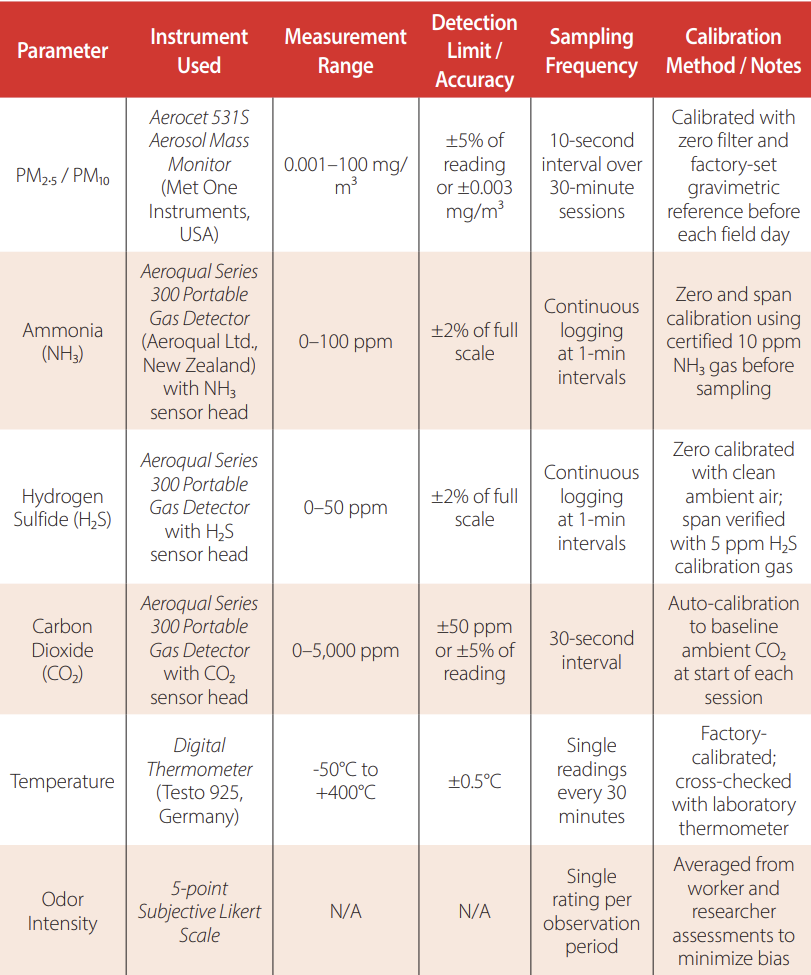
Environmental measurements were taken during active slaughter operations (between 7:00 a.m. and 11:00 a.m.) at each site. In this study, environmental air quality measurements were taken at each of the six selected slaughterhouses to objectively assess occupational exposure to airborne pollutants commonly associated with meat processing activities. An Aerocet 531 particulate monitor was used to measure concentrations of particulate matter, including PM2.5, which are known to penetrate deep into the respiratory tract and pose serious health risks with prolonged exposure. The Aerocet monitor was calibrated prior to data collection and operated during peak activity hours at each site to ensure representative readings [21]. For gaseous pollutants, ammonia (NH₃), hydrogen sulfide (H₂S) and carbon dioxide (CO₂) levels were measured using Aeroqual 300 gas detectors, which provided digital readings and were handheld for flexibility during on-site monitoring. Measurements were taken at multiple time intervals and locations within each facility to account for spatial and temporal variability [22]. All instruments were used in accordance with the manufacturers’ operational guidelines to ensure data reliability. These environmental readings were later analyzed alongside worker health data to examine correlations between pollutant levels and reported symptoms, offering a transparent, evidence-based understanding of the occupational health risks present in Aba’s slaughterhouses.
Odor assessment was conducted using a subjective 5-point Likert scale, allowing both slaughterhouse workers and members of the research team to rate the intensity of perceived odors during active operational hours [23]. The scale ranged from 1 to 5, where 1 represented “no odor,” 2 “slightly noticeable,” 3 “moderate,” 4 “strong,” and 5 “overpowering.” Workers were asked to rate odor levels based on their daily experiences within the facility, while researchers recorded their own ratings during site visits, particularly during peak slaughtering periods when emissions were highest. This dual approach was employed to capture both long-term user perceptions and immediate field impressions, recognizing that odor perception can be influenced by exposure duration, adaptation, and environmental factors such as airflow and temperature. Although subjective, this method provided valuable insight into the nuisance level and environmental discomfort experienced at each site. The ratings from both groups were compiled, averaged, and compared across all six slaughterhouses to identify facilities with the most severe odor problems, which were then analyzed in relation to infrastructure quality, proximity to residential areas, and reported health complaints.
Temperature and Ventilation
Temperature within each slaughterhouse was measured using a handheld digital thermometer (table 1), with readings taken during peak operational periods at multiple interior points to capture variations influenced by crowding, equipment use, and ambient conditions [24]. Ventilation was assessed through direct observation, focusing on the design type, classified as either natural (e.g., open windows, vents) or mechanical (e.g., fans, exhaust systems). The evaluation also included the number and positioning of air openings, as well as the quality of airflow observed during operations [25]. While no specialized airflow measurement devices were used, ventilation effectiveness was judged qualitatively based on air movement indicators such as odor dispersion, heat buildup, and visible air circulation. This combined temperature and ventilation assessment provided a practical understanding of the indoor environmental conditions experienced by workers in each facility.
Infrastructure Assessment Checklist
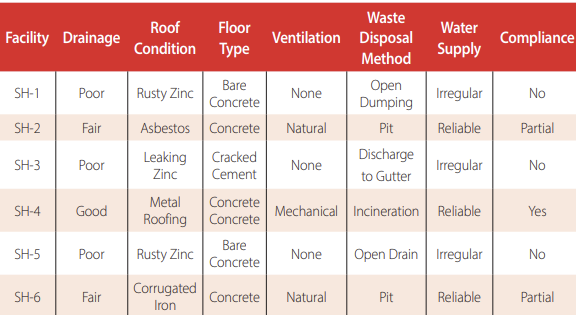
A standardized observation checklist, adapted from the Nigeria’s Federal Ministry of Environmental (FMEnv) abattoir policy guidelines, was employed to systematically assess environmental and structural conditions across all six slaughterhouses [26]. This checklist included key indicators such as the quality and functionality of drainage systems, methods of solid and liquid waste disposal, the condition of floors and roofing materials, the availability and reliability of water supply, and the overall structural compliance of each facility with relevant urban planning and public health regulations. Observations were made during peak operational hours to ensure accurate representation of daily practices and environmental performance.
Key Informant Interviews
Six urban planners and two public health officials were interviewed using a semistructured interview guide designed to explore key issues related to zoning enforcement, abattoir regulation, and broader urban development challenges within the Aba metropolis as described by [27]. The interviews aimed to gather expert perspectives on the systemic factors influencing the siting and operation of slaughterhouses, as well as the implications for public and occupational health. With informed consent from all participants, interviews were audio-recorded, transcribed verbatim to preserve accuracy, and subsequently coded and analyzed using NVivo 12 software. This facilitated a rigorous thematic analysis, allowing for the identification of recurring patterns, stakeholder concerns, and institutional gaps affecting urban planning and environmental governance in the context of meat processing zones.
Table 1. Summary of Instruments and Environmental Measurement Parameters
Data Analysis
Quantitative data obtained from the worker surveys and environmental measurements were first organized using Microsoft Excel and then analyzed using SPSS version 25.0. The analysis included means, standard deviations, and frequency distributions to summarize health symptoms, environmental exposures, and workplace characteristics. Pearson’s correlation analysis was employed to examine the associations between proximityrelated variables (e.g., distance to residential areas) and reported health outcomes, while one-way ANOVA was used to identify statistically significant differences in environmental conditions and health indicators across the six slaughterhouse locations. In parallel, geographic information system (GIS) data were processed to produce proximity heat maps, zoning overlays, and density maps, which visualized the spatial relationships between slaughterhouses and surrounding land uses. These spatial outputs helped to contextualize environmental exposure risks within the urban fabric. Additionally, qualitative data from key informant interviews were analyzed thematically using NVivo 12, allowing for the extraction of contextual insights related to urban planning practices, policy enforcement gaps, and systemic challenges in regulating abattoir operations within the city.
Ethical Considerations
Ethical approval for this study was obtained from the Abia State University Research Ethics Committee, ensuring that all procedures met established ethical standards for research involving human participants. Prior to data collection, all participants were provided with detailed information about the study’s purpose, procedures, and their rights, after which they gave written informed consent. Participation was entirely voluntary, and respondents were assured that they could withdraw from the study at any time without consequence. To maintain confidentiality and protect privacy, all data were collected anonymously, and no personally identifiable information was recorded. Additionally, no invasive procedures were involved at any stage of the research.
RESULTS
This section presents the findings from spatial analyses, environmental sampling, surveys, and observational assessments conducted across six slaughterhouses (SH-1 to SH-6) in Aba, Abia State. Results are organized into thematic areas: site characteristics and urban proximity, infrastructure conditions, air quality and environmental hazards, occupational health outcomes, and statistical relationships between urban factors and health risks.
Slaughterhouse Site Characteristics and Urban Proximity
Table 2 shows the GPS-based spatial data and proximity measurements. Three slaughterhouses (SH-1, SH-3, and SH-5) were located within 150 meters of residential areas, while four were within 300 meters of active market centers. These facilities were also embedded in high-density urban zones.
Table 2. Summary of Proximity Characteristics of Slaughterhouses
| Slaughterhouse | Distance to Nearest Residence (m) | Distance to Market (m) | Adjacent Land Use | Zoning Compliance |
| SH-1 | 95 | 190 | Residential | No |
| SH-2 | 330 | 490 | Light Industrial | Yes |
| SH-3 | 130 | 220 | Mixed Commercial | No |
| SH-4 | 460 | 310 | Commercial | Yes |
| SH-5 | 100 | 140 | Residential | No |
| SH-6 | 280 | 360 | Market District | No |
Infrastructure and Facility Conditions
Observational data (Table 3) revealed that most slaughterhouses had poor drainage systems and lacked designated waste disposal structures. SH-1, SH-3, and SH-5 operated in buildings with cracked floors, rusty roofs, and no mechanical ventilation. Only SH-2 and SH-4 partially complied with urban planning and sanitation standards.
Table 3. Infrastructure Quality Assessment
Environmental Hazards and Air Quality
Environmental measurements (Figure 1) revealed elevated concentrations of particulate matter (PM2.5) and gas pollutants at several sites, especially SH-1, SH-3, and SH-5. Odor levels were highest at SH-1 and SH-3, rated as “very offensive” by over 85% of respondents.
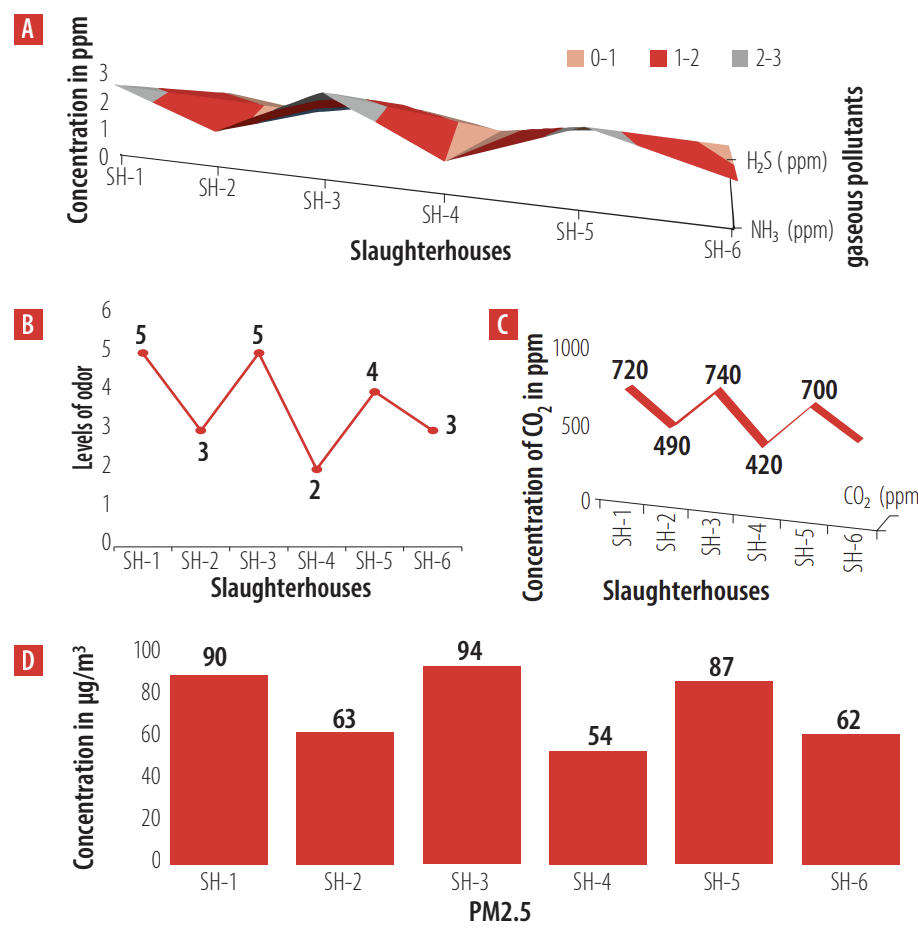
Figure 1
Highest Pollutant and Odor Levels Occurred at SH-1 and SH-3. A = Concentration of Ammonia (NH3) and hydrogen sulfide (H2S) in parts per million, B = Level of odor rated between 1- 5 scale. C = Concentration of Carbon dioxide in parts per million. D = Concentration of Particulate Matter (PM2.5) in µg/m3
Figure 1.Highest Pollutant and Odor Levels Occurred at SH-1 and SH-3. A = Concentration of Ammonia (NH3) and hydrogen sulfide (H2S) in parts per million, B = Level of odor rated between 1- 5 scale. C = Concentration of Carbon dioxide in parts per million. D = Concentration of Particulate Matter (PM2.5) in µg/m3
Occupational Health Outcomes
Survey responses indicated a high prevalence of respiratory and skin-related health complaints among workers in poorly located and inadequately designed facilities. SH-3 had the highest rate of reported occupational illnesses, followed by SH-1 and SH-5 (Figure 2).
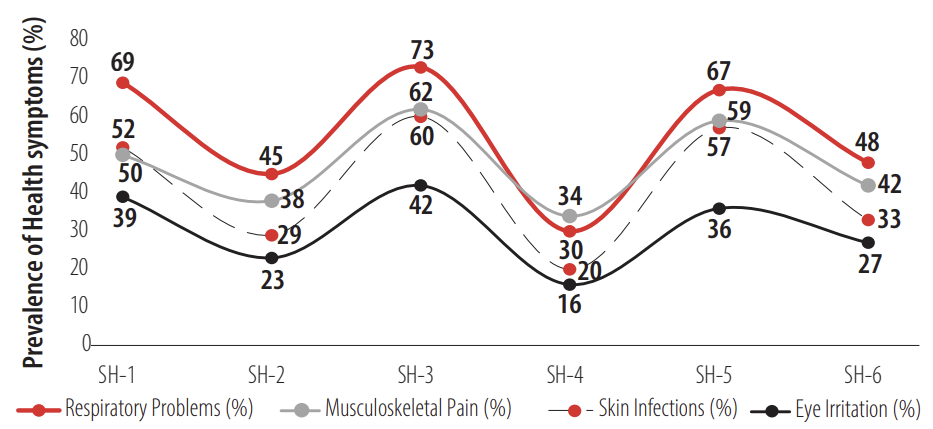
Figure 2
Highest Rates of Respiratory and Skin-related Illnesses were Reported at SH-3, SH-1, and SH-5 (n = 180)
Figure 2. Highest Rates of Respiratory and Skin-related Illnesses were Reported at SH-3, SH-1, and SH-5 (n = 180)
Perception of Environmental and Health Risks
A majority of workers reported feeling exposed to unsafe conditions, citing poor sanitation, heat, waste proximity, and lack of personal protective equipment (Figure 3).
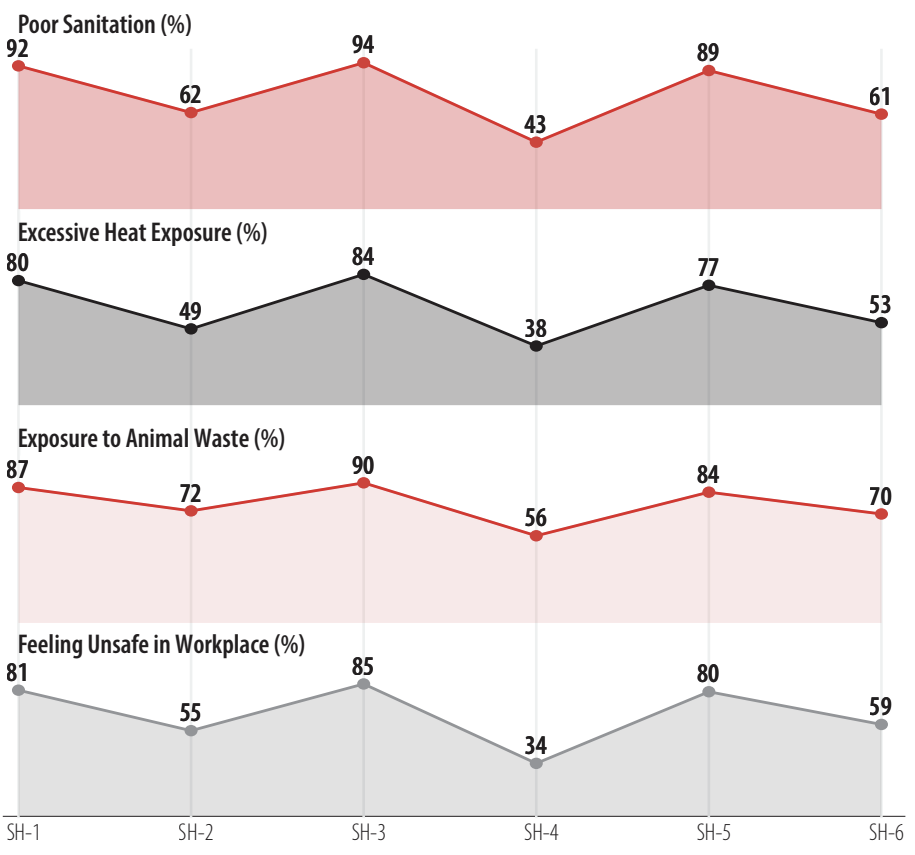
Figure 3
Majority of Workers Reported Unsafe Conditions
Figure 3.Majority of Workers Reported Unsafe Conditions
Correlation Analysis
Statistical analysis revealed significant relationships between proximity-related urban planning factors and occupational health outcomes among slaughterhouse workers. Specifically, proximity to residential areas showed a strong negative correlation with the incidence of reported respiratory problems (r = -0.66, p < 0.01), indicating that the closer a slaughterhouse was to residential zones, the higher the prevalence of respiratory complaints 9 (Figure 4). Additionally, PM2.5 concentrations exhibited a strong positive correlation with the overall illness rate among workers (r = 0.74, p < 0.001), suggesting that elevated levels of fine particulate matter were closely associated with increased health risks. Furthermore, zoning compliance was found to be negatively correlated with both odor intensity and ammonia (NH₃) concentration levels (r = -0.61, p < 0.05), highlighting that facilities failing to adhere to urban planning regulations experienced higher environmental pollution and odor nuisance. These findings underscore the critical role of urban design, zoning enforcement, and environmental monitoring in mitigating occupational health risks in slaughterhouse environments.
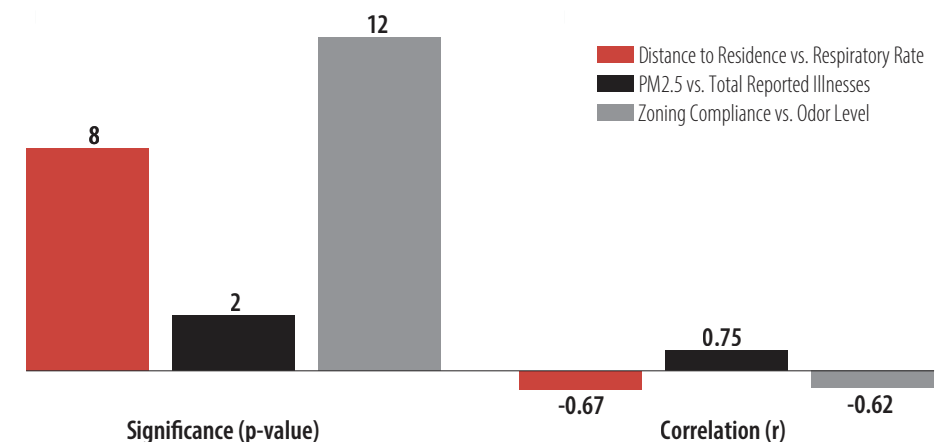
Figure 4
Higher PM2.5 Levels at SH-3 and SH-5 Correlate with Elevated Respiratory Complaints
Figure 4.Higher PM2.5 Levels at SH-3 and SH-5 Correlate with Elevated Respiratory Complaints
Qualitative Insights
Key informant interviews with city planners and environmental health officials revealed several systemic challenges affecting the regulation of slaughterhouse operations in Aba. Notably, only two of the six facilities had undergone zoning audits within the past three years, indicating weak oversight and regulatory compliance. Respondents highlighted that enforcement of abattoir planning and zoning laws was frequently undermined by political interference, lack of institutional autonomy, and chronic underfunding of urban planning and environmental health departments. Additionally, stakeholders emphasized the urgent need for a multi-pronged approach that includes the relocation of poorly sited slaughterhouses, retrofitting of existing facilities to meet health and environmental standards, and strict enforcement of spatial buffer zones to reduce exposure risks for both workers and nearby residents.
DISCUSSION
The findings of this study provide compelling evidence that the location, architectural design, and infrastructure quality of meat processing facilities in Aba, Abia State, significantly influence occupational disease transmission among workers. While these results align with global research, they offer context-specific insight into how planning failures and weak infrastructure amplify health risks in densely populated African cities.
Urban Proximity and Health Risks
Most facilities examined were situated within 150 meters of residential neighborhoods and market centers, in clear violation of basic zoning standards. Such close siting intensifies exposure to odor, air pollution, and wastewater, thereby increasing the risk of bioaerosol inhalation and contact with contaminated runoff. Similar spatial health dynamics have been documented in Ede, Nigeria [28] and Accra, Ghana [29], where informally sited abattoirs contribute substantially to local health burdens. The strong negative correlation between proximity to homes and reported respiratory symptoms (r = -0.66, p < 0.01) reinforces the view that distance from residential areas is a key determinant of occupational well-being. Workers in closely situated facilities not only face higher exposure risks but may also act as transmission links between abattoirs and surrounding communities.
Infrastructure and Environmental Exposure
The physical condition of many facilities—particularly SH-1, SH-3, and SH-5—was notably poor, with inadequate drainage, ventilation, and waste containment. These deficiencies explain the elevated concentrations of PM₂.₅, ammonia, and hydrogen sulfide recorded during peak processing hours. Such pollutants are known irritants of the respiratory tract and skin [30] and correspond with the high incidence of cough, breathlessness, and dermatitis among workers. By contrast, facilities with improved layout and partial compliance with planning standards (SH-2 and SH-4) exhibited lower pollutant levels and fewer health complaints. This trend aligns with observations from [31] in Bangladesh, emphasizing that sound facility design can mitigate occupational health risks even in low-resource settings.
Occupational Illness Patterns
Illness patterns observed—chiefly respiratory disorders, skin infections, and musculoskeletal pain—mirror findings from previous occupational health studies in low- and middle-income countries [6, 9]. These conditions are typically linked to poor ventilation, repetitive motion, long standing hours, and inadequate protective gear, all of which were common in the surveyed facilities. The high prevalence of respiratory symptoms, particularly at SH-3 (73%) and SH-1 (69%), corresponds closely with elevated PM₂.₅ levels. The positive correlation between air pollutant exposure and illness rates (r = 0.75, p < 0.002) underscores that environmental conditions within these operations directly influence worker health.
Policy and Planning Gaps
Interviews with urban planners and environmental health officials revealed deep-seated governance challenges. Weak law enforcement, limited institutional coordination, and inadequate funding have allowed substandard and informal abattoirs to proliferate in vulnerable districts. The absence of spatial buffers and irregular zoning audits have created environments where occupational and public health risks persist unchecked. These systemic lapses highlight the urgent need for policy reforms that prioritize health-centered urban design—enforcing minimum distance regulations, mandating infrastructure upgrades, and embedding slaughterhouse-specific building codes into municipal planning frameworks.
Implications for Urban Health Planning
This research underscores the importance of integrating health impact assessments into urban planning for meat processing facilities. The evidence suggests that the spatial siting and architectural form of these operations are as critical to health outcomes as hygiene practices within them. Promoting urban health in Aba requires a transition from reactive sanitation measures to proactive, design-based planning. Slaughterhouse development must therefore be reimagined as a public health priority—balancing operational efficiency with the protection of workers, consumers, and nearby residents.
CONCLUSION AND RECOMMENDATIONS
This study has demonstrated that the urban placement and architectural design of slaughterhouses in Aba, Abia State, played a critical role in shaping occupational health outcomes among meat processing workers. The clustering of poorly planned, inadequately ventilated, and improperly zoned slaughter facilities within residential and commercial areas has led to elevated environmental hazards, including excessive air pollutants, offensive odors, and direct human exposure to waste and bioaerosols. Workers in slaughterhouses located closer to residential areas and operating in structurally compromised buildings exhibited significantly higher rates of respiratory problems, skin infections, and musculoskeletal issues. These patterns were strongly linked to poor infrastructure, lack of spatial separation from sensitive land uses, and systemic failures in urban planning enforcement. The findings underscore the urgent need for an integrated, health-sensitive approach to urban planning and facility design in the meat processing sector. Without such interventions, the current slaughterhouse system in Aba will continue to pose severe risks not only to occupational groups but to the broader public as well.
Based on the findings of this study, several evidence-based recommendations are proposed to address the occupational and environmental health risks associated with poorly planned slaughterhouses in Aba. First, urban planning reforms should be implemented to enforce strict zoning regulations that establish minimum setback distances between slaughterhouses and sensitive land uses, supported by a municipal abattoir siting framework guided by GIS modeling and environmental risk assessments. Second, facilities that are non-compliant or poorly located such as SH-1, SH-3, and SH-5, should be relocated to designated agro-industrial zones, while existing facilities must be retrofitted with improved drainage systems, proper roofing, mechanical ventilation, and effective waste containment structures. Third, environmental monitoring must be institutionalized through routine air quality checks for PM2.5, ammonia (NH₃), and hydrogen sulfide (H₂S), alongside the establishment of local government environmental health units empowered to conduct inspections and enforce regulations. Fourth, worker protection must be prioritized by ensuring the provision of personal protective equipment (PPE), regular health screenings, and mandatory occupational safety training. Licensing of slaughterhouses should be tied to periodic occupational health audits. Fifth, urban planning processes should become more data-driven, integrating GIS and health surveillance data into abattoir siting, relocation, and risk communication strategies. Active community engagement is also essential to raise public awareness about the health implications of proximity to slaughterhouses. Finally, policy integration is needed at the state level to embed urban health considerations into planning legislation and the Abia State Environmental Sanitation Policy, while aligning local slaughterhouse regulations with FMEnv guidelines to ensure compliance with international best practices for both structural design and spatial placement.
While this study provides valuable insights into the environmental and economic impacts of slaughterhouse externalities on residential property values and livability in Aba, certain limitations must be acknowledged. First, environmental measurements such as air quality and odor intensity were taken during a single time period, which may not capture seasonal or operational variations in emission levels. Second, odor assessment relied partly on subjective Likert-scale ratings from both researchers and residents, introducing potential perception bias despite standardized evaluation procedures. Third, property value data were based on reported rents and market appraisals at the time of survey, which may fluctuate with broader economic trends. Additionally, while spatial analyses using GIS provided strong locational context, they did not fully account for micro-environmental variables such as wind direction or informal waste management practices. Future studies should therefore adopt longitudinal designs, integrate continuous monitoring tools, and incorporate more objective sensory and valuation metrics to strengthen causal inferences.
ACKNOWLEDGEMENTS
The authors are grateful to the Abattoirs workers in Aba (the subjects) who contributed immensely in making the completion of this project possible.
FUNDING
No external funding was received for this study
AUTHORSHIP CONTRIBUTION STATEMENT
F.U. Madu: Writing – original draft, Visualization, Methodology, Investigation, Formal analysis, Conceptualization. C.E. Unagha: Writing – review & editing, Validation and supervision G.C. Anozie: Writing – review & editing, Validation, Resources, methodology. A.C. Nnamdi: Writing – review & editing, investigation, Resources, methodology. A.S. Chukwukere: Writing – review & editing, Resources, methodology. C. O. Obele: methodology, analysis and Writing – review & editing
DATA AVAILABILITY STATEMENT
Data are available upon reasonable request to the corresponding author (in exceptional cases).
CONFLICT OF INTEREST
The authors declare that they have no known competing financial interests or personal relationships that could have appeared to influence the work reported in this paper.
REFERENCES
[1] Ezechi, E. H., Nwabuko, C. G., Enyinnaya, O. C., & Babington, C. J. (2017). Municipal solid waste management in Aba, Nigeria: Challenges and prospects. Environmental Engineering Research, 22(3), 231–236. https://doi.org/10.4491/eer.2017.100
[2] Aliyu, A. A., & Amadu, L. (2017). Urbanization, cities, and health: The challenges to Nigeria – A review. Annals of African Medicine, 16(4), 149–158. https://doi.org/10.4103/aam.aam_1_17
[3] Abdullahi, A., Hassan, A., Kadarman, N., Yakubu, J., Adeyemo, O., & Lua, P. L. (2016). Occupational hazards among abattoir workers associated with noncompliance to meat processing and waste disposal laws in Malaysia. Risk Management and Healthcare Policy, 9, 157–163. https://doi.org/10.2147/RMHP.S98271
[4] Kasaeinasab, A., Jahangiri, M., Karimi, A., Tabatabaei, H. R., & Safari, S. (2017). Respiratory disorders among workers in slaughterhouses. Safety and Health at Work, 8(1), 84–88. https://doi.org/10.1016/j.shaw.2016.04.002
[5] Adeyemo, O. K., Ayodeji, I. O., & Aiki-Raji, C. O. (2002). The water quality and sanitary conditions in a major abattoir (Bodija) in Ibadan, Nigeria. African Journal of Biomedical Research, 5, 51–55.
[6] Okoli, C. G., Okoli, I. C., Okorondu, U. V., & Opara, M. N. (2006). Environmental and public health issues of animal food products delivery system in Imo State, Nigeria. Online Journal of Health and Allied Sciences, 2, 2.
[7] Dada, O. T., Odufuwa, B. O., Badiora, A. I., Agbabiaka, H. I., Ogunseye, N. O., & Samuel, O. S. (2020). Environmental hazard and health risks associated with slaughterhouses in Ibadan, Nigeria. Environmental Hazards, 20(2), 146–162. https://doi.org/10.1080/17477891.2020.1747382
[8] Istifanus, V., & Bwala, H. B. (2017). Infrastructure challenges: The review of environmental and health implication of abattoir operation in a developing country. Journal of Research in Humanities and Social Science, 5(6), 60–72.
[9] Grace, K., Davenport, F., Hanson, H., Funk, C., & Shukla, S. (2015). Linking climate change and health outcomes: Examining the relationship between temperature, precipitation and birth weight in Africa. Global Environmental Change, 35, 125–137. https://doi.org/10.1016/j.gloenvcha.2015.06.010
[10] Hasan, M. A., Uddin, M. B., & Ahmed, S. S. U. (2024). Knowledge, attitudes and practices of meat hygiene among slaughterhouse workers and retail meat sellers in Bangladesh. Heliyon, 10(22), e40066. https://doi.org/10.1016/j.heliyon.2024.e40066
[11] Ovuru, K. F., Izah, S. C., Ogidi, O. I., Imarhiagbe, O., & Ogwu, M. C. (2023). Slaughterhouse facilities in developing nations: Sanitation and hygiene practices, microbial contaminants and sustainable management system. Food Science and Biotechnology, 33(3), 519–537. https://doi.org/10.1007/s10068-023-01406-x
[12] Adesokan, H. K., Akinseye, V. O., & Sulaimon, M. A. (2018). Knowledge and practices about zoonotic tuberculosis prevention and associated determinants among livestock workers in Nigeria. PLOS ONE, 13(6), e0198810. https://doi.org/10.1371/journal.pone.0198810
[13] Nwanta, J., Onunkwo, J., & Ezenduka, E. (2010). Analysis of Nsukka metropolitan abattoir solid waste and its bacterial contents in southeastern Nigeria: Public health implication. Archives of Environmental & Occupational Health, 65(1), 21–26. https://doi.org/10.1080/19338240903390263
[14] Kagira, J. M., Njuki, P. N., Maingi, N., Githigia, S. M., Ng’ang’a, J. C., & Karuga, J. W. (2010). Characteristics of the smallholder free-range pig production system in western Kenya. Tropical Animal Health and Production, 42(5), 865–873. https://doi.org/10.1007/s11250-009-9500-y
[15] Bienibuor, A. K., Preko, K., Aning, A. A., Menyeh, A., Wemegah, D. D., & Appiah, M. K. (2025). Groundwater potential and quality assessment of the Oti Pendjari and Obosum Groups of the Atebubu municipality. Applied Water Science, 15, Article 195. https://doi.org/10.1007/s13201-025-02309-1
[16] Abada, I. M., & Ngwu, E. C. (2019). Corruption, governance, and Nigeria’s uncivil society, 1999–2016. Análise Social, 54(231(2)), 386–408. https://www.jstor.org/stable/26747550
[17] Aluwong, T., & Bello, M. (2010). Emerging diseases and implications for Millennium Development Goals in Africa by 2015: An overview. Veterinaria Italiana, 46(2), 137–145.
[18] Von Schirnding, Y., & Yach, D. (2002). Unhealthy consumption threatens sustainable development. Revista de Saúde Pública, 36(4), 379–382. https://doi.org/10.1590/S0034-89102002000400001
[19] Fator, M., & Zomrawi, N. (2015). Etrex Garmin GPS receiver accuracy testing. International Journal of Recent Innovation Trends in Computing and Communication, 3(5).
[20] Arita, S., Ba, M. F., Traoré, Z., Bonnet, E., Faye, A., & Ridde, V. (2023). Use of interviewer-administered telephone surveys during infectious disease outbreaks, epidemics and pandemics: A scoping review. BMJ Global Health, 8(5), e011109. https://doi.org/10.1136/bmjgh-2022-011109
[21] Madu, F. U., Akubugwo, E. I., Ogbulie, T. E., Uhegbu, F. O., Agoro, E. S., Nwosu, O. U., Ugenyi, A. U., Ononogbo, P. C., & Madu, M. C. (2025a). Characterization of particulate matter exposure and health implications in poorly ventilated chemical retail outlets: Evidence from Ogbo-Ogwu Market. Pollution. https://doi.org/10.22059/poll.2025.382761.2566
[22] Madu, F. U., Akubugwo, E. I., Ogbulie, T. E., Uhegbu, F. O., Agoro, E. S., Nwosu, O. U., Ugenyi, A. U., Ononogbo, P. C., & Madu, M. C. (2025b). Air quality and health risks in chemical supply shops in Southeastern Nigeria. Toxicology and Industrial Health, 41(5). https://doi.org/10.1177/07482337251349359
[23] Dal Bò, E., Gentili, C., Spoto, A., Bruno, G., Castellani, A., Tripodi, C., Fischmeister, F. P. S., & Cecchetto, C. (2021). The social odor scale: Development and initial validation of a new scale for the assessment of social odor awareness. PLoS ONE, 16(12), e0260587. https://doi.org/10.1371/journal.pone.0260587
[24] Alif, S., & Fauzi, A. (2020). Association between surface air temperature and land use on the campus scale. Journal of Geoscience, Engineering, Environment, and Technology, 5(3), 161–169. https://doi.org/10.25299/jgeet.2020.5.3.5187
[25] Atkinson, J., Chartier, Y., Pessoa-Silva, C. L., et al. (Eds.). (2009). Natural ventilation for infection control in health-care settings. World Health Organization. https://www.ncbi.nlm.nih.gov/books/NBK143277/
[26] FMEnv. (2005). Policy guidelines on market and abattoir sanitation. Federal Ministry of Environment, Abuja, Nigeria. https://ehcon.gov.ng/wp-content/uploads/2020/05/POLICY-GUIDELINES-ON-MARKET-AND-ABATTOIR-SANITATION-2005-1.pdf
[27] Scott, C., Bor, N., Reyher, K. K., Tasker, A. J., Buller, H., Bueno, I., et al. (2025). A qualitative exploration of the enablers of and barriers to conformance with antibiotic withdrawal periods on smallholding, peri-urban pig farms in Kiambu County, Kenya. PLoS ONE, 20(1), e0312362. https://doi.org/10.1371/journal.pone.0312362
[28] Adeniyi, L., Ayodeji, O., Folorunso, S., & Adesoye, O. (2025). Assessing environmental quality and health implications of slaughterhouses’ operation within urban residential settings of a developing country. Urban Sustainability and Society, 2, 178–195. https://doi.org/10.1108/USS-08-2024-0052
[29] Bempah, S., Curtis, A., Awandare, G., Ajayakumar, J., & Nyakoe, N. (2022). The health-trash nexus in challenging environments: A spatial mixed methods analysis of Accra, Ghana. Applied Geography, 143, 102701. https://doi.org/10.1016/j.apgeog.2022.102701
[30] Bălă, G. P., Râjnoveanu, R. M., Tudorache, E., Motișan, R., & Oancea, C. (2021). Air pollution exposure—the (in)visible risk factor for respiratory diseases. Environmental Science and Pollution Research International, 28(16), 19615–19628. https://doi.org/10.1007/s11356-021-13208-x
[31] OECD/UNCTAD. (2023). Production transformation policy review of Bangladesh: Investing in the future of a trading nation. OECD Development Pathways. OECD Publishing. https://doi.org/10.1787/8b925b06-en
Notas de autor
francmadu2002@gmail.com
Información adicional
redalyc-journal-id: 7261